


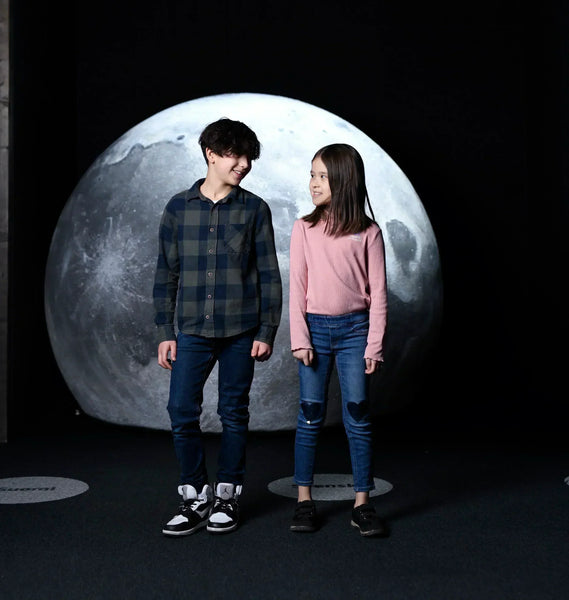
Our Journey in Space
Explore the mysteries of our solar system and beyond
Step into the boots of an astronaut and journey to the outer limits of the cosmos!
What is it like to live aboard a space station? How do rocket engines overcome Earth’s gravitational well, and what does our pale blue dot look like from lunar orbit? Our Journey in Space lets you touch real celestial objects and experience the wonders of human astronautics.
Exhibition Highlights
- Authentic Muonionalusta meteorite specimen you can touch with your own hands
- 1:1 replica of an astronaut pressurized glovebox maintenance console
- Full-scale scale models of rocket propulsion engines and planetary rovers
- Interactive planetary gravity stations comparing your weight across the Solar System
Hands-on Discovery Stations
Astronaut training and cosmic exploration interactives built for hands-on experimentation:
Lunar Gravity Jump
Step into a counterweighted harness system that offsets 5/6ths of your body weight to experience bounding across the lunar surface.
Orbital Docking Simulator
Control thruster bursts in three translational axes to manually dock a supply capsule with the International Space Station.
Astronaut Glovebox Challenge
Slide your hands into thick, pressurized spacesuit gloves and attempt precision mechanical assembly against vacuum resistance.
Exoplanet Spectroscopy Lab
Analyze light spectra passing through exoplanetary atmospheres to detect molecular signatures of water, methane, and ozone.
Scientific Principles & Phenomena
Explore orbital mechanics, Kepler's laws of planetary motion, rocket staging, cosmic radiation shielding, and the thermal extremes of vacuum environments.
From the fiery plasma plumes of multi-stage chemical rockets to the gentle ion drives used on deep-space probes, discover how Newton’s third law of motion—every action produces an equal and opposite reaction—is the bedrock of all space travel.
Did you know?
Weightlessness in orbit is not caused by the lack of gravity! At the altitude of the International Space Station (400 km), Earth's gravity is still 90% as strong as on the surface. Astronauts float because they are in permanent freefall around the globe.
Exhibit Highlights & History
The Space Gallery has been a cornerstone of Heureka since its earliest days, continually updated to reflect recent milestones from the Artemis lunar program and the James Webb Space Telescope.
Other exhibitions at Science Center
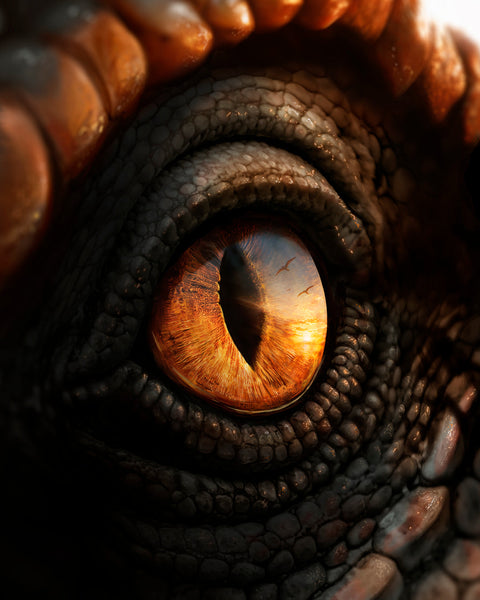 NEW EXHIBITION
The Evolution of Dinosaurs
Meet dinosaurs from across the ages
Dinosaurs are part of the great story of evolution on Earth. The exhibition takes you on a fascinating adventure through the Triassic, Jurassic and Cretaceous periods.
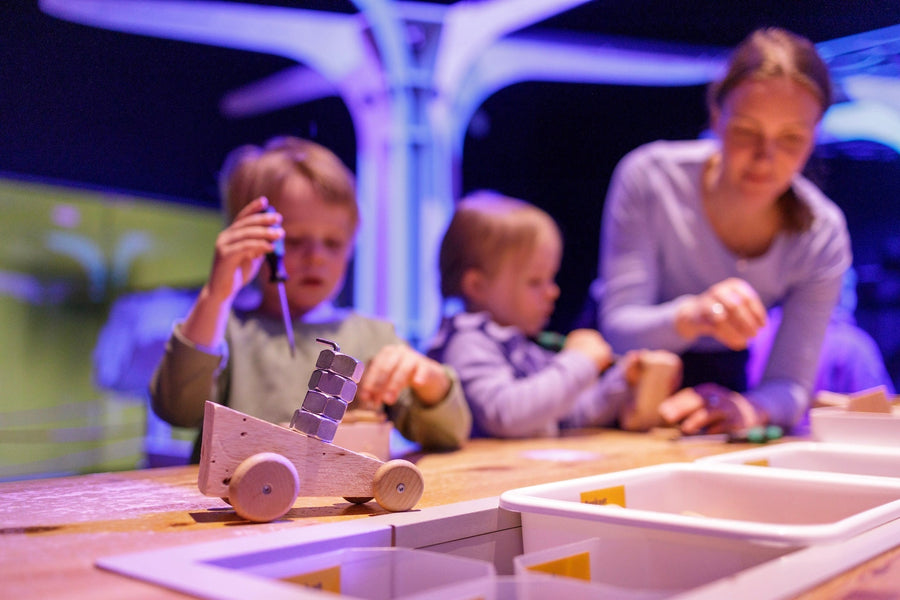 PERMANENT EXHIBITION
Play and Explore
The Idea Workshop for young inventors
Design, build, test, and improve! In the Idea Workshop you can build wind-powered vehicles, mechanical contraptions, and chain reactions.
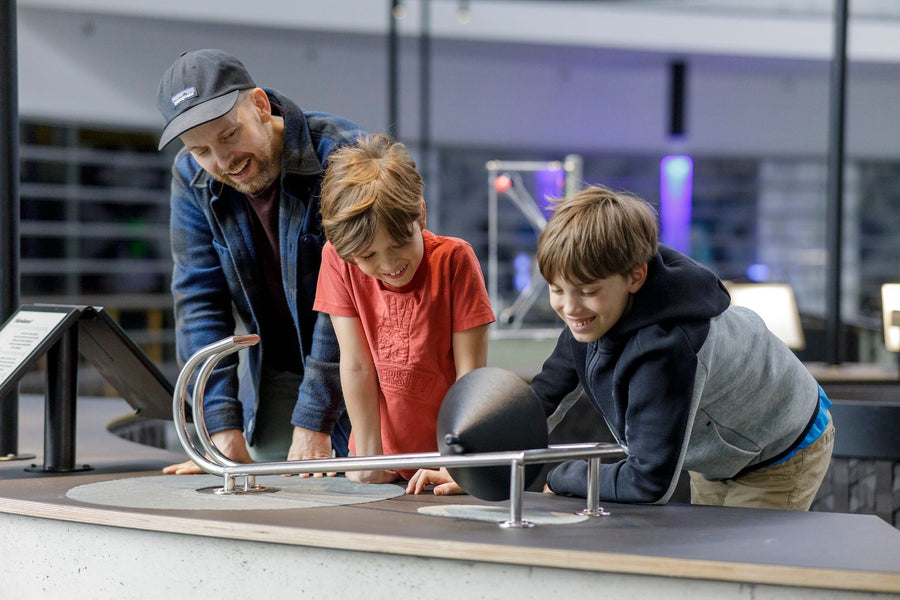 PERMANENT EXHIBITION
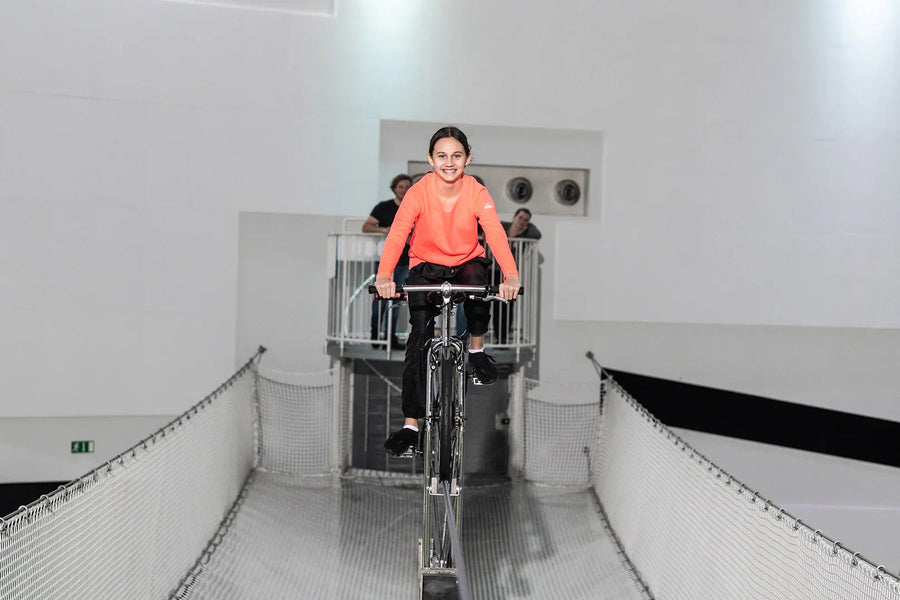
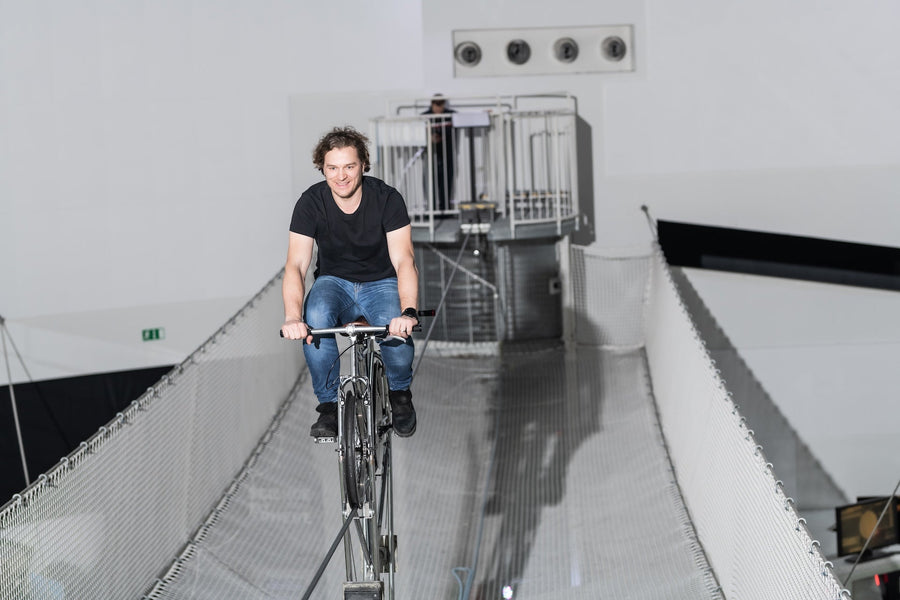
Science Center Classics
Beloved interactive science experiments
Ride a bicycle on a wire suspended in mid-air, step inside a giant soap bubble, and test your reaction speeds. Classic exhibits loved across generations.
 PERMANENT EXHIBITION
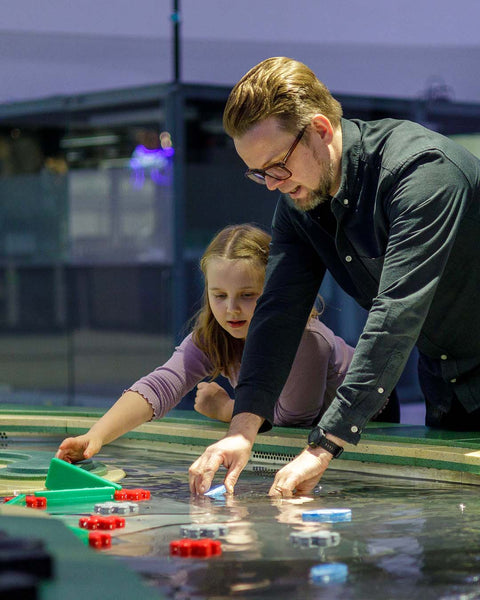
Water – The Stream of Life
The journey and power of water on our planet
Explore hydroelectric dams, water currents, ocean ecosystems, and the importance of clean water for global biodiversity.
 PERMANENT EXHIBITION
Main Exhibition Area
The vibrant core of discovery at Science Center
Over 200 interactive science installations spanning physics, biology, chemistry, mathematics, and human senses.
 DAILY PRESENTATIONS
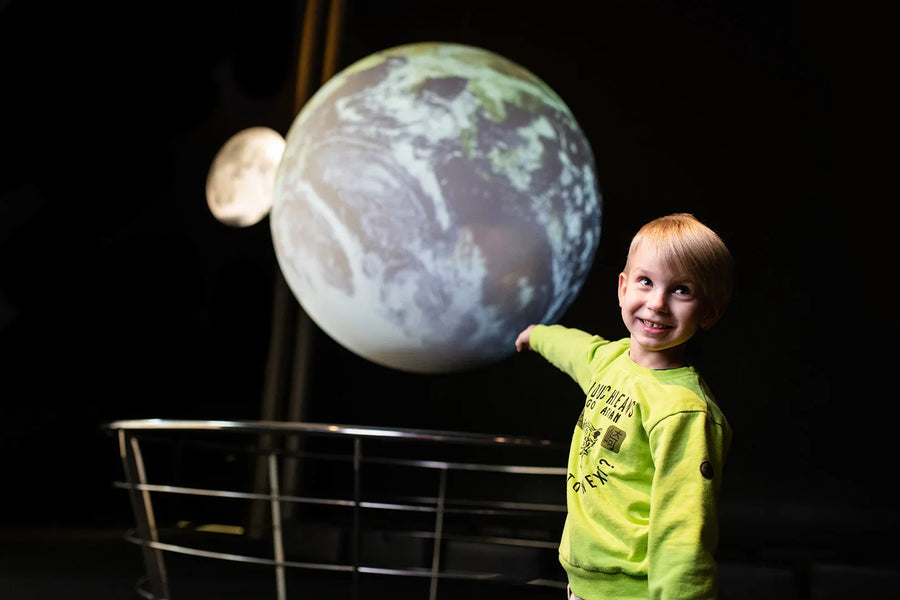
Science on a Sphere
NOAA animated global projection globe
A room-sized spherical projection system developed by NOAA that displays planetary data, atmospheric flows, ocean currents, and climate models.
 PERMANENT EXHIBITION
Artificial Intelligence – Me, Myself & AI
Understand how algorithms think and create
How do neural networks learn? Can machines recognize your facial emotions or paint art? Explore the ethics and mechanics of artificial intelligence.
 OUTDOOR PARK
Exhibitions Outdoors – Science Park Galilei
Science Park Galilei alongside Keravanjoki river
Experience outdoor physics, giant sound mirrors, water locks, and botanical rock gardens in the picturesque Science Park Galilei alongside Keravanjoki river.